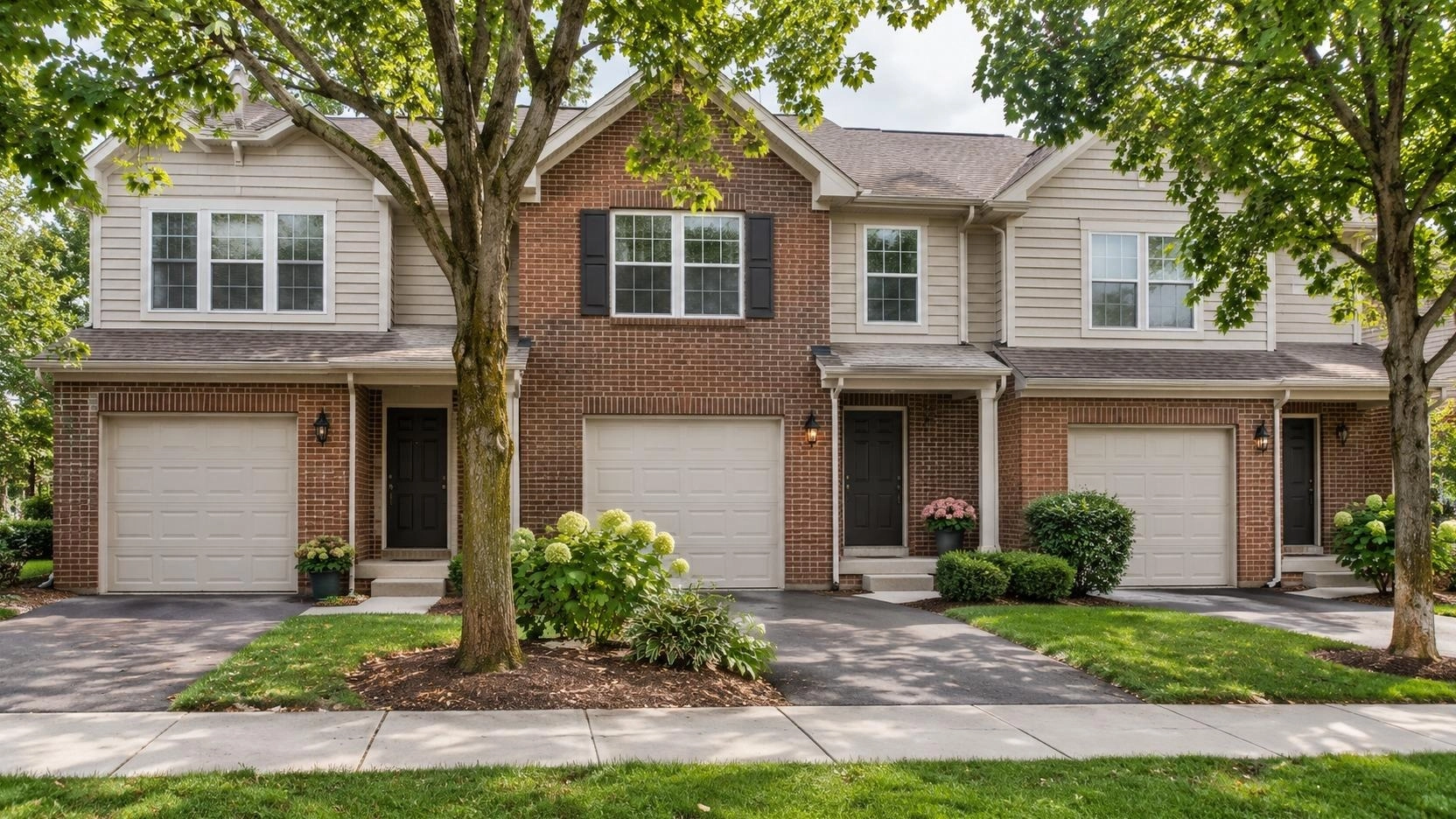
A townhome can look like a straightforward compromise between a detached house and an apartment. You may see an attached garage, a private entrance, and a shared landscape and assume you understand the ownership responsibilities. In Southwest Chicagoland, those visible features are only the beginning. The governing documents and the property’s legal ownership structure determine questions that the architecture cannot answer.
Whether you are touring in Tinley Park, New Lenox, or another community within your search, investigate the particular association and unit. Two similar buildings can divide maintenance duties differently. This article offers a practical way to organize that review so you can understand the proposed purchase beyond the monthly assessment shown in the listing.
Identify the ownership structure first
Ask whether the property is legally a condominium, a fee-simple townhome subject to an association, or another arrangement. Have your attorney and title professionals explain the documents that establish the answer. “Townhome” describes a building style in everyday conversation, but it should not be used as a shortcut for legal rights and obligations.
This distinction affects which documents and review questions are relevant. Illinois has specific condominium resale disclosure provisions, but those provisions should not be assumed to govern every property marketed as a townhome. Ask your attorney which requirements apply to the actual transaction and what materials should be requested within your contract timeline.
Create a cover sheet for the property file with the association’s name, management contact if applicable, unit identification, and the confirmed ownership structure. Use consistent names when requesting records. A development may involve more than one association or another layer of responsibility, so ask whether additional governing documents or charges apply to the property you would own.
Request the governing documents as a set
Ask for the declaration, bylaws, rules, amendments, and other materials your attorney identifies as relevant. Check whether the set is complete and current. An older copy of the rules may omit a later amendment, while a summary from a resident may describe common practice without reflecting the governing documents.
Keep the documents in an organized folder and note the date received. If a statement in the listing conflicts with the written materials, flag it for clarification. Do not quietly choose the interpretation you prefer. A claim such as “the association takes care of everything outside” needs to be tested against the actual allocation of responsibility.
Read with your intended use in mind. You do not need to memorize every provision to identify important questions. Mark the sections that relate to maintenance, alterations, parking, rentals, pets, insurance, and charges. Then ask your attorney or the responsible association representative to explain unclear terms through the appropriate process.
Create a maintenance responsibility map
List the components that matter to ownership: roof, siding, windows, doors, decks, patios, driveways, landscaping, utility connections, and any shared systems. Beside each, record who is responsible according to the relevant documents. If responsibility is unclear, leave the entry unresolved and request an explanation rather than guessing from what a neighbor does.
Distinguish routine work from replacement
An association may handle one type of service while another responsibility remains with the owner. Ask separately about routine maintenance, repair, replacement, and damage-related work. The answer may depend on how the component is classified in the governing documents. A broad label on a marketing sheet is not enough to establish those distinctions.
Also ask how work is requested and approved. If you notice a roof concern or a damaged exterior component, who evaluates it, who selects the contractor, and how is the owner informed? Understanding the process is useful even when you are not directly responsible for arranging the repair. Shared responsibility can still involve coordination and delays.
Understand the monthly charge in context
Obtain a current statement of regular assessments and ask what services they fund. Compare the stated charge with the association’s current budget and the information provided for the sale. If there are additional association layers, separate each charge clearly. A low number in a listing may not describe the entire recurring obligation.
Ask about approved changes, existing special assessments, and any other charges relevant to the unit or transfer. Your attorney should explain how the contract handles responsibility between buyer and seller. Do not assume that a payment arrangement discussed informally is part of the agreement or that a seller’s final payment eliminates every future association obligation.
Build your ownership budget using the confirmed information and clearly labeled assumptions. Association charges belong alongside taxes, insurance, utilities, maintenance duties retained by the owner, and financing costs. The goal is a realistic view of the property, not a comparison based solely on which community advertises the lowest monthly assessment.
Review planning for shared expenses
Ask for the available financial and planning records appropriate to the transaction, including the current budget and information about reserves and anticipated projects. Have your attorney and other qualified advisers help interpret them. A reserve balance is more meaningful when considered with the work it is expected to support, rather than viewed as an isolated large or small number.
Where meeting records or project information are available, look for discussions that affect your intended ownership. A planned roof project, recurring maintenance issue, or proposed change in service may deserve follow-up. Distinguish an idea under discussion from an approved action. Neither should be described inaccurately when you summarize the records for your decision.
Ask specific questions about unresolved items: Has a scope been established? Is a contractor selected? Is funding approved? What information remains unavailable? No document can guarantee that future costs will never arise. Your review should clarify known obligations and uncertainties rather than attempt to certify the association as permanently free of financial risk.
Match the rules to your actual plans
Make a short list of the ways you expect to use the home. Include vehicles, pets, outdoor equipment, work arrangements, visitors, and any possibility of renting the property later. Then locate the applicable rules and ask for clarification where needed. A lifestyle assumption is easier to evaluate when it becomes a specific question.
For example, do not assume that a driveway or garage arrangement permits every vehicle you intend to keep. Ask how parking rights and restrictions apply to the unit. Similarly, a small patio may feel private while still being subject to rules about alterations, storage, or use. Physical access does not establish unrestricted permission.
Avoid relying on another resident’s apparent practice as proof of what is allowed. The observation may be incomplete, an exception may exist, or a rule may be enforced differently than you expect. Your decision should rest on the applicable documents and reliable clarification. If a particular use is essential, resolve it before treating the home as a suitable match.
Ask insurers about the coverage boundary
Provide the relevant association insurance information to a qualified insurance professional and ask what coverage you would need for your ownership interest and circumstances. The association’s policy and an owner’s policy serve different purposes. Do not assume that the association’s insurance covers your belongings, every interior component, or every possible assessment or loss.
Ask the professional to explain the relationship between coverage, deductibles, exclusions, and the governing documents. Use a concrete example relevant to the property, such as damage involving a shared component and an interior room, while recognizing that actual coverage depends on policy terms and facts. The purpose is to understand questions before a claim occurs.
Get a written quote based on the correct property type and information. Compare the assumptions behind quotes rather than only the premium. If the documents change or new information arrives during the transaction, send it to the insurer. A preliminary estimate based on a generic description may need revision once the ownership structure is confirmed.
Inspect the unit and understand the inspection limits
Association involvement does not eliminate the need to evaluate the property. Ask your home inspector what will be inspected, what access is available, and which shared or concealed components fall outside the service. A unit inspection and a review of association records answer different questions; neither replaces the other.
If the inspector identifies a concern involving a component under association responsibility, ask how to obtain relevant information through the transaction. Keep the technical observation separate from a conclusion about who must pay. The governing documents, professional findings, and contract may all matter. Your advisers can help connect those pieces without making an unsupported assumption.
Carla’s buyer guide provides a framework for coordinating inspections and other purchase steps. Add association document requests early, since receiving a large set of records shortly before a decision deadline can make thoughtful review difficult. Track missing materials as actively as you track the physical inspection appointment.
Compare associations with a consistent worksheet
When touring several Southwest Chicagoland townhomes, use the same categories for each: ownership structure, regular charges, known additional obligations, maintenance allocation, planned projects, insurance questions, and rules affecting your use. Add a source or document reference beside each answer. This prevents a casual comment from one showing from becoming an unquestioned fact in your comparison.
Include an unresolved column. A property with a lower stated charge but incomplete records should not automatically rank ahead of one whose responsibilities are clearly documented. The worksheet should reveal uncertainty rather than hide it. Decide which missing answers are essential to your choice and ask your advisers how to address them within the transaction terms.
Learn about Carla Patrone’s service areas and approach as you compare properties around communities such as Oak Lawn, Palos Hills, and Tinley Park. Keep the evaluation focused on each actual unit and association. A favorable impression of a community does not establish how a particular association manages maintenance or finances.
Make the decision about the full ownership arrangement
Before proceeding, explain the arrangement in your own words: what you own, what you maintain, what you pay regularly, which additional obligations are known, and which rules affect your plans. If you cannot describe a major point clearly, return to the relevant document or professional. That is a useful signal that a question remains open.
A townhome purchase is more than selecting a floor plan. You are choosing a particular combination of private ownership, shared responsibilities, and governing rules. Careful review helps you decide whether that combination fits your circumstances and gives you a practical file to use after moving in.
FAQs
Are all townhomes legally condominiums?
No. Confirm the legal ownership structure through the transaction documents and your attorney. The building’s appearance does not establish which rules or statutes apply.
Does the monthly assessment cover all exterior work?
Do not assume so. Review the documents for each component and distinguish routine maintenance, repair, replacement, and damage-related responsibilities.
Can I rely on a resident’s description of the rules?
Use it as a question to investigate. Current governing documents and appropriate professional clarification are more reliable than an informal summary of common practice.
Contact Carla Patrone
Exploring townhomes in Southwest Chicagoland? Contact Carla Patrone at 708-372-5134 to organize your search and association-document questions.