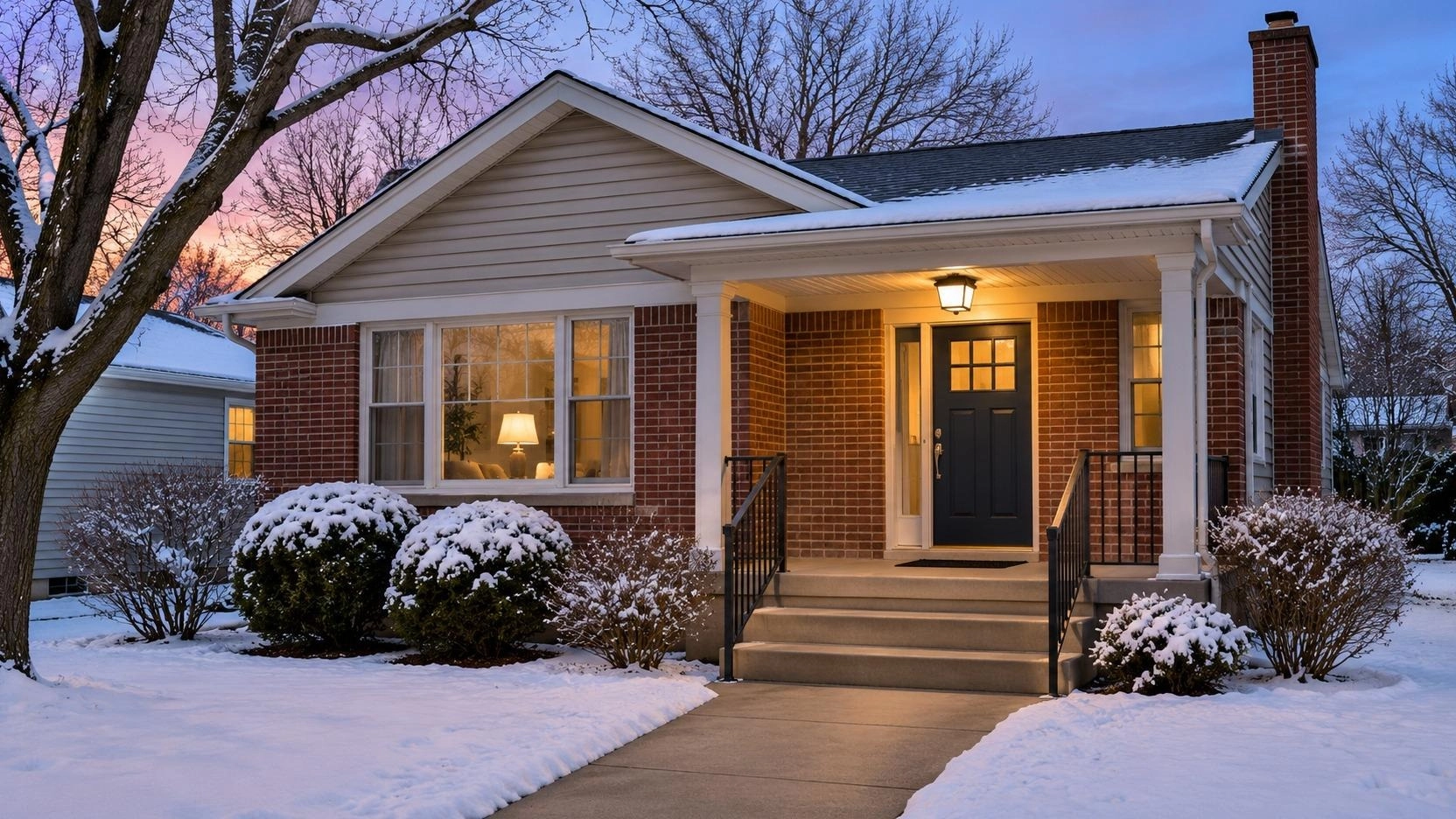
A winter showing begins before a buyer reaches the front door. The approach to the house, the place to remove wet footwear, and the first view into the rooms all affect how easily someone can evaluate the property. For a Lockport seller, thoughtful preparation means making the visit straightforward while presenting the home’s actual condition clearly.
This is different from deciding which major repairs to complete before listing. Winter showing preparation is an operating plan: who checks the approach, how appointments are coordinated, what happens when weather changes, and how the house is reset between visits. A consistent routine can reduce last-minute stress without requiring elaborate staging or promising a faster sale.
Plan the arrival route from the street
Walk the route a visitor is expected to use and identify practical obstacles. Consider the path from an available parking location to the correct entrance, the visibility of steps, and the space needed to open the door. Do this in the conditions buyers may encounter, while avoiding unsafe surfaces. Ask a qualified service provider to address hazards you cannot manage safely.
Make the intended entrance clear through your agent’s showing instructions. If the normal approach differs from the one a visitor might guess, explain it in advance. A side entrance, shared drive, or unusual layout deserves a concise note. Buyers should not have to explore several doors or cross an unprepared area to work out where to begin.
Confirm applicable local parking and snow-related requirements through current city information. Do not assume that a space available on a dry afternoon will remain usable after a storm. For a property near historic downtown Lockport, where the street and lot arrangement may differ from another part of town, property-specific arrival instructions are especially useful.
Assign responsibility for weather checks
Decide who will check the property before appointments and what that check includes. An owner living in the house may handle the coordination differently from an owner who has already moved. If you use a service provider, confirm the scope, communication method, and what happens when conditions change between scheduled visits.
A morning cleanup may not describe the approach later in the day. Ask your agent how to communicate an unexpected access problem promptly. If the route cannot be made suitable for a visit, discuss rescheduling rather than allowing buyers to arrive without warning. An appointment calendar is only useful when someone is also monitoring the property’s current condition.
Keep essential contact information together: the person checking the house, the maintenance provider, and the agent coordinating access. Establish who can authorize additional service. This small administrative step can prevent confusion when the owner is at work or away and a weather change requires a timely decision.
Create a practical entry area
Give visitors a clear place to pause, manage wet footwear, and continue into the house. Choose stable, appropriately placed floor protection that does not create a trip hazard or interfere with doors. Avoid loose layers, curled edges, and decorative pieces that make the path harder to navigate. The arrangement should support the visit, not become another obstacle.
Discuss footwear instructions with your agent. Any request should be practical for the property and communicated consistently. Keep the area uncluttered enough that several people can enter without blocking one another. If seating is provided, place it where it can be used without narrowing the route through the house.
Inspect the setup after showings. A mat that started dry may become saturated, and items can shift as visitors enter. Have a reset plan for cleaning, drying, or replacement as needed. A tidy entry in the listing photographs is useful, but the day-to-day showing condition is what buyers will actually encounter.
Make lighting work for the appointment time
Winter appointments may occur when natural light is limited. Walk through the house at a similar time and check how visitors will see hallways, stairs, work areas, and transitions between rooms. Replace failed bulbs using appropriate products and qualified help where needed. Keep lighting consistent enough that the home is comfortable to view without relying on unusually bright temporary fixtures.
Open window coverings where appropriate during daylight appointments, while preserving privacy and considering the actual view. Remove objects that unnecessarily block useful light. If a room remains dim, discuss a simple lighting arrangement with your agent rather than attempting to conceal it in photographs. Buyers benefit from understanding how the room functions in ordinary conditions.
Keep presentation consistent with the house
Avoid filters, decorative lighting, or staging choices that create a misleading impression of condition. The purpose of good lighting is to help buyers see the space. A clear view of a room’s dimensions, surfaces, and circulation is more useful than a dramatic scene that is difficult to reproduce during a normal showing.
Maintain comfortable, ordinary interior conditions
Discuss appropriate heating operation and maintenance with qualified service professionals, particularly if the house is vacant. Do not improvise with unattended portable heating equipment to prepare for a showing. A visit should take place under sensible operating conditions, with systems used according to professional guidance and manufacturer instructions.
If a system has a known limitation or service appointment pending, communicate through your agent and the appropriate advisers. Do not describe a temporary staging adjustment as a repair. Keep available service records organized so that condition questions can be answered from documentation rather than from the temperature during one short visit.
Aim for a house that feels ready for ordinary use. Excessive fragrance, loud music, or elaborate seasonal effects can distract from the property and may make some visitors uncomfortable. Cleanliness, access, and a clear layout usually provide a more useful foundation for evaluating rooms than attempts to create a heavily managed atmosphere.
Keep exterior features understandable
Snow or seasonal conditions may limit what a visitor can observe. Ask your agent how to describe those limits accurately and what additional information may be appropriate. A buyer should not be encouraged to treat an obscured patio, roof area, or landscape feature as fully evaluated simply because the home looks attractive in winter photographs.
If you have photographs from another season, identify their date or season and use them as supplemental context. They can help explain the layout of a yard or garden, but they do not establish current condition. Avoid altering images to imply that features are presently visible or maintained in a way that has not been verified.
For sheds, detached garages, or other outbuildings, clarify which areas are included in the showing and how safe access will be arranged. Do not invite visitors onto an unsafe route to demonstrate every feature. Coordinate additional viewing or professional evaluation through the transaction process when current conditions prevent a meaningful inspection.
Coordinate pets, personal items, and daily routines
A winter showing can interrupt household routines more than an appointment in mild weather. Plan where pets will be during visits and who will manage them. Avoid relying on a visitor to understand an animal’s behavior or keep a particular interior door closed. Clear arrangements protect the showing experience and reduce the chance of a last-minute cancellation.
Create a short routine for personal items near the entrance, kitchen, and main living spaces. Store sensitive documents, medications, valuables, and other private items securely. This is ordinary preparation for allowing visitors into your home, and it should fit the way you actually live rather than requiring the house to remain untouched between appointments.
Build realistic appointment windows with your agent. If work, caregiving, or transportation commitments affect your availability, explain them early. A consistent plan is easier to maintain than repeatedly agreeing to times you cannot accommodate. The objective is workable access and reliable communication, not a schedule that creates avoidable stress for the household.
Prepare separately for a vacant house
If you have moved out, assign someone to monitor the property and discuss a suitable maintenance plan with qualified professionals. Confirm who checks heating operation, visible changes, access conditions, and any service needs. A vacant house still requires attention between showings, and an appointment request should not be the first reason anyone has visited it in weeks.
Keep the monitoring arrangement distinct from the agent’s showing role. Ask each participant what they are responsible for and how issues will be reported. Do not assume that the person opening the door for a buyer is also inspecting systems or maintaining the exterior. Written responsibilities help prevent gaps when several people are involved.
Carla’s seller guidance provides a starting point for organizing listing preparation and access. Adapt that process to whether you are living in the home, traveling, or coordinating from another location. The best showing routine is one that can be maintained consistently throughout the listing period.
Build a short reset checklist
Keep the final checklist focused on actions that matter before each visit: confirm the appointment, check the approach, prepare the entry, set ordinary lighting, secure personal items, and complete the agreed pet arrangements. Add property-specific tasks only when they are necessary. A long checklist filled with optional styling details is harder to follow reliably.
After a visit, check the property according to your access plan. Confirm that doors and windows are secured, lights and systems are in their intended state, and the entry area is ready for the next appointment. Coordinate these responsibilities with your agent so there is no uncertainty about who performs the final check.
Use feedback to improve practical details. If visitors repeatedly struggle to find the entrance or understand a room’s use, consider a clearer instruction or a simpler furniture arrangement. Do not interpret every comment as a reason to undertake a major project. Separate a showing-process problem from a condition or pricing question that deserves a broader discussion.
Keep the sale focused on the property
A winter listing in Lockport can still present the home’s layout, features, and condition clearly when the viewing process is well organized. Weather does not justify unsupported promises about demand or a guaranteed result. It calls for thoughtful access, accurate information, and a plan that responds to actual conditions.
Learn about Carla Patrone’s approach to selling as you prepare your home. Discuss the property’s arrival route, daily routine, vacant-home needs if applicable, and any features that are difficult to view in the season. Those details help shape a practical plan around the house you are selling.
The most useful winter preparation is often modest: clear responsibilities, an understandable entrance, comfortable rooms, and consistent communication. When those basics are handled, buyers can spend their visit considering the home rather than working around avoidable obstacles. You also gain a repeatable routine that makes the listing period easier to manage.
FAQs
Should I use summer photographs in a winter listing?
They may provide supplemental context if accurately identified. They should not replace current images or be presented as proof of a feature’s present condition.
Who should check the approach before a showing?
Assign that responsibility explicitly. The owner, a designated caretaker, or a service provider may handle it, with a clear communication plan if conditions change.
Does a vacant home need a separate showing plan?
Yes. Clarify monitoring, maintenance, heating guidance, access, and post-showing checks instead of assuming that someone else is covering those responsibilities.
Contact Carla Patrone
Planning a winter sale in Lockport? Contact Carla Patrone at 708-372-5134 to develop a showing plan suited to your home and schedule.