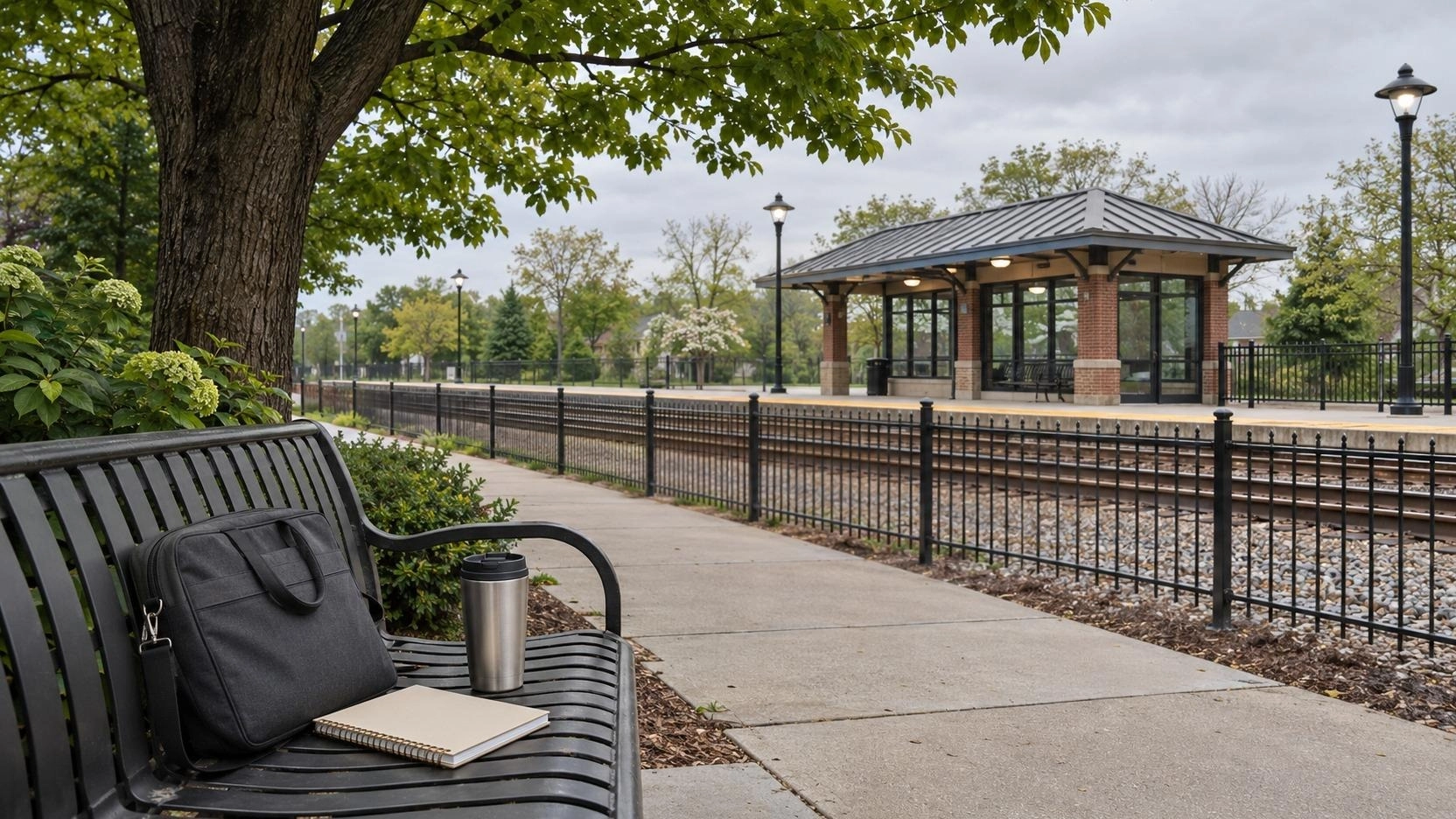
A listing’s distance from Chicago does not tell you how a weekday will feel. Your trip begins at a particular front door and ends at a particular workplace, appointment, or other destination. The time between those points may include driving, walking, parking, waiting, transfers, and the final stretch after leaving a train. A useful home search considers that complete journey.
Across Southwest Chicagoland, communities such as Lockport, Lemont, Tinley Park, and New Lenox offer different locations relative to the places you use. The right fit depends on your actual schedule and route, not a universal ranking of which suburb has the best commute. Before treating travel convenience as a reason to buy, test it in a structured way.
Define the trips you actually make
Start with a weekly travel inventory. List the destinations you visit, the days you need to arrive, and the times that matter. Include trips beyond a primary workplace: caregiving, appointments, classes, shopping, or other regular commitments. A home that works well for one journey may create difficulty for another that happens just as often.
Distinguish fixed arrival times from flexible ones. If you must be at a location before a specific shift begins, a route that works only under ideal conditions may not be suitable. If your schedule varies, test more than one departure window. Do not build the search around a generic nine-to-five pattern unless that is how you actually travel.
Write down which modes you are willing and able to use. Driving, rail, bus connections, walking, cycling, or a combination can create different possibilities. Consider your own accessibility and mobility requirements, equipment, and tolerance for transfers. The exercise should reflect your circumstances rather than an assumption about how a typical buyer travels.
Start from a specific property
Use the actual home address when comparing routes. A town name or a central map marker can hide meaningful differences in access. Two homes in the same community may connect to a station or major road differently. The first part of the trip deserves attention before you focus on the longer rail or highway segment.
Visit the surrounding streets at appropriate times and observe the route legally and safely. Note turns, access points, intersections, and the practical path to the transportation option you intend to use. Do not enter private areas or assume that an apparent shortcut is public. Confirm access rather than building a commute around an unverified route.
For a home near historic downtown Lockport, for example, investigate the actual connection to your chosen station or road. For a property farther from that area, repeat the same process from its own address. Neither the neighborhood’s name nor its appearance establishes the time or convenience of your individual journey.
Verify the rail line and the destination terminal
Check the current operator information for the station you plan to use. Lockport’s city transit page identifies its Metra service as the Heritage Corridor, while Tinley Park’s official information identifies Rock Island service. These are distinct routes. A station’s presence in a community does not mean it offers the same schedule or destination access as another station.
Confirm the actual downtown terminal and the onward trip to your destination. A train that reaches central Chicago may still leave a substantial walk or connection. Treat that final segment as part of the commute, including the time needed to leave the platform, navigate the station, and continue to the exact address you use.
Read the current timetable for the relevant day and direction. Check return options as carefully as morning departures, especially if your workday can run late. Schedules, service alerts, and special operating days can change, so verify them during your search and again before a test trip. Avoid relying on a travel-time claim copied into an old listing.
Include station access and parking
If you plan to drive to a station, investigate the specific parking arrangement through the responsible authority. Ask about permits, daily options, availability procedures, payment methods, and any restrictions relevant to your schedule. Do not assume that a visible lot guarantees a usable space when you need one or that a nearby property’s location provides parking rights.
Add the time needed to park and reach the platform. A route planner may estimate the drive to the station entrance without accounting for the actual parking location. If walking is part of the trip, examine the path, crossings, lighting, and access in the conditions you expect to encounter. Identify concerns that require further information rather than making unsupported safety claims.
For a drop-off, pickup, or bus connection, verify where the transfer happens and how the timing works. A connection that appears convenient on a map may require a longer walk or a different entrance. Test the full sequence when practical, and confirm accessibility details directly with the operator when they are important to your use.
Run a realistic door-to-door test
Choose a representative day and travel from the property area to the actual destination at the time you would normally leave. Record the departure, arrival, and major transitions. If you cannot begin inside the home, note the limitation and use a lawful nearby starting point. Keep the test transparent rather than presenting it as a precise measurement from the front door.
Record the parts, not only the total
Break the journey into departure preparation, local access, parking or transfer, main travel, and the final segment. This reveals where time and uncertainty enter the trip. A single total can hide a rushed transfer or a parking search that would be difficult to repeat. The component view also helps you compare alternative routes more fairly.
Test the return journey. The evening route may involve different timing, parking access, or connections, and it must fit your routine too. Record how the trip feels as well as how long it takes: whether you had a useful margin, whether a connection required rushing, and which steps would be difficult when carrying the items you normally bring.
Repeat where variability matters
One successful trip is useful evidence, but it is not a guarantee. If the commute is central to your purchase decision, repeat it in another relevant time window or on another representative day when practical. Note unusual conditions, service changes, or events so you do not mistake an exceptional journey for the ordinary pattern.
Use current route-planning information as a supplement to direct observation. Compare estimates for your actual departure time, but retain the distinction between a forecast and a completed trip. Do not average unrelated travel windows into a number that appears more reliable than the underlying evidence. A range with clearly stated conditions is more useful than false precision.
Decide how much variability you can accommodate. A flexible arrival may allow one set of options, while a tightly timed responsibility may require a larger margin or a different route. This is a personal planning question. Avoid turning your own preference into a claim that a community is suitable or unsuitable for everyone.
Evaluate the driving route beyond mileage
For a driving commute, check the full route rather than comparing straight-line distance. Consider the local segment, major road access, tolls if applicable, destination parking, and the walk from the parked vehicle. Verify current costs with the responsible operators or facilities instead of relying on a friend’s older estimate.
Observe the route at the time you would use it, without operating a phone or taking notes while driving. Have a passenger record information or write observations after safely parking. If construction or a temporary closure affects the test, identify it in your notes and check official updates. Do not assume that a temporary condition will persist or disappear by your move date.
Compare alternatives that are realistically available to you. A route that saves a few minutes but adds an awkward transfer or an unreliable parking assumption may not be preferable. Conversely, a slightly longer route may fit your routine better. The decision should account for the whole journey and its practical demands, not simply the shortest estimate on a screen.
Test the backup plan
Ask what you would do if the preferred train, vehicle, or connection were unavailable. Identify another feasible route and check its current operation, cost, and timing. A backup exists only when it can actually get you where you need to go under the relevant circumstances. Naming a nearby road or station is not enough.
Consider late departures and unexpected schedule changes. If you occasionally finish work later than planned, verify the return options for that situation. If someone else may need the household vehicle, assess how that affects the route. These questions help distinguish a dependable routine from one that works only when every assumption remains unchanged.
Keep the backup proportionate to your needs. You do not need to predict every disruption, but you should understand the consequences of the most relevant ones. A clear alternative can reduce uncertainty when comparing homes, especially when the preferred route depends on a narrow connection or limited personal flexibility.
Compare the cost and the time together
Create a planning worksheet that includes the travel expenses relevant to each option. Depending on the route, these may include fares, parking, tolls, fuel, or other vehicle costs. Use current official prices where available and label estimates clearly. Avoid presenting a complete cost calculation when important inputs remain unknown.
Consider how often you would make the trip. A hybrid schedule, changing work pattern, or regular additional destination can alter the comparison. Use your expected routine and test a second plausible scenario if it would materially affect the decision. This helps you avoid choosing a home based on a travel pattern that may not describe your life after moving.
Carla’s buyer guide can help organize the larger search. Add the commute worksheet alongside property condition, ownership costs, and other practical requirements. Transportation is one part of suitability, and a strong result on one trip should not obscure an unresolved concern about the home itself.
Use the findings to refine the search
Summarize each property with the tested route, conditions, observed timing, current costs used, and unresolved questions. Compare homes using the same categories. A property in Lemont and one in Tinley Park may offer different tradeoffs for your actual destination, and those differences are more useful than a broad claim about which community is closer to everything.
Learn about Carla Patrone’s service areas and discuss the results of your tests as the search develops. Share concrete findings, such as a required arrival window or an impractical transfer, so the next set of properties can be evaluated against the needs you have established.
A thoughtful commute review turns a vague preference for convenience into evidence you can use. Start at the specific property, include every segment, verify current service, and test the return and backup options. You will have a clearer basis for choosing a Southwest Chicagoland home that supports the journeys you actually make.
FAQs
Can I use a listing’s commute time as my planning figure?
Treat it as a prompt to investigate. Test the route from the specific property to your exact destination at the times you expect to travel.
Does living near a station guarantee a convenient commute?
No. Verify the line, timetable, terminal, station access, parking or transfers, and the final trip to your destination.
Should I check the evening trip separately?
Yes. Return service and connections may fit your schedule differently. Include late departures and a practical backup when those situations matter to you.
Contact Carla Patrone
Searching in Southwest Chicagoland? Contact Carla Patrone at 708-372-5134 to align your property search with your commute and everyday priorities.